

Transform Your Business with Document Automation: Definition, Uses, and Benefits
Creating complex documents like presentations, contracts, or custom quotes often demands significant time, meticulous attention to detail, and substantial resources. Traditionally, this involved manual processes—drafting, editing, and formatting documents by hand—which were prone to errors and inefficiencies. In today’s fast-paced digital landscape, document automation offers a revolutionary solution, streamlining these tasks to boost efficiency, accuracy, and scalability. If your team is bogged down by manual document preparation, this comprehensive guide will explore what document automation is, how it works, its diverse applications, and the transformative benefits it brings to businesses in 2025.
What is Document Automation?
Document automation leverages advanced software to automate the creation, management, and distribution of transactional documents. Guided by predefined system rules, workflows, and enterprise standards, it pulls data from various sources to populate templates, enabling rapid, accurate, and large-scale document production. This technology eliminates the need for repetitive manual tasks, making it an essential tool for businesses of all sizes, from small startups to global enterprises. By automating document workflows, organizations can save time, reduce errors, and focus on high-value activities that drive growth.
How Document Automation Works
Understanding the mechanics of document automation is key to realizing its potential. The process begins with data collection, where the software gathers text, numbers, or images from diverse sources, such as databases, CRMs, or third-party applications. This data is intelligently analyzed and organized, then seamlessly inserted into predefined templates. These templates, which may include text blocks, images, tables, or charts, are designed to ensure consistency and precision in document creation.
For example, a sales team generating custom quotes can use document automation to pull customer data from a CRM, insert it into a branded template, and produce a polished document in seconds. The software ensures that each document adheres to company standards, reducing manual oversight and enabling high-speed production. By integrating with existing systems, document automation creates a seamless workflow that enhances productivity and minimizes errors, making it a cornerstone of modern business operations.

Applications of Document Automation
Document automation offers a wide range of applications, transforming how businesses manage documents across industries like finance, healthcare, legal, and sales. Below are some of the most impactful uses that make this technology indispensable in 2025.
Data Integration for Seamless Document Production
Document automation software excels at integrating with third-party data sources, such as CRMs, ERPs, or cloud platforms, to extract relevant information for document creation. This capability allows businesses to handle large volumes of data efficiently, performing tasks like sourcing, exporting, editing, and formatting that would be impractical manually. For instance, a financial institution can automate the generation of client statements by pulling transaction data directly from its database, ensuring accuracy and saving hours of manual work. This seamless integration enhances data reliability and streamlines document production.
Standardization and Template Management
Maintaining consistent, up-to-date templates is critical for professional document creation. Document automation enables users to create, edit, duplicate, and reuse templates with ease. Any changes made by administrators—such as updates to branding, legal disclaimers, or formatting—are automatically synced across the platform, ensuring all documents reflect current company standards. This eliminates the risk of outdated or inconsistent documents, providing a unified brand experience across all outputs, from contracts to marketing collateral.
Compliance and Governance Simplified
Many industries, such as healthcare, finance, and legal, face strict regulatory requirements for document management. Document automation enhances compliance by providing greater visibility and control over document workflows. It automatically embeds essential legal fine print, such as non-disclosure clauses or terms of service, into templates like contracts or agreements. Features like e-signature integration, secure document transmission, and shortened document lifecycles further ensure compliance with regulations while improving efficiency. This reduces the risk of non-compliance and streamlines audits.
Intelligent Workflow Automation
Document automation empowers businesses to create intelligent workflows that streamline document creation and distribution. For example, a sales team can automate the generation of quotes, contracts, or proposals, allowing representatives to focus on building customer relationships rather than administrative tasks. These workflows can be customized to route documents to the right stakeholders, trigger approvals, or schedule deliveries, all while maintaining accuracy and consistency. By automating these processes, businesses can operate more efficiently and respond to customer needs faster. 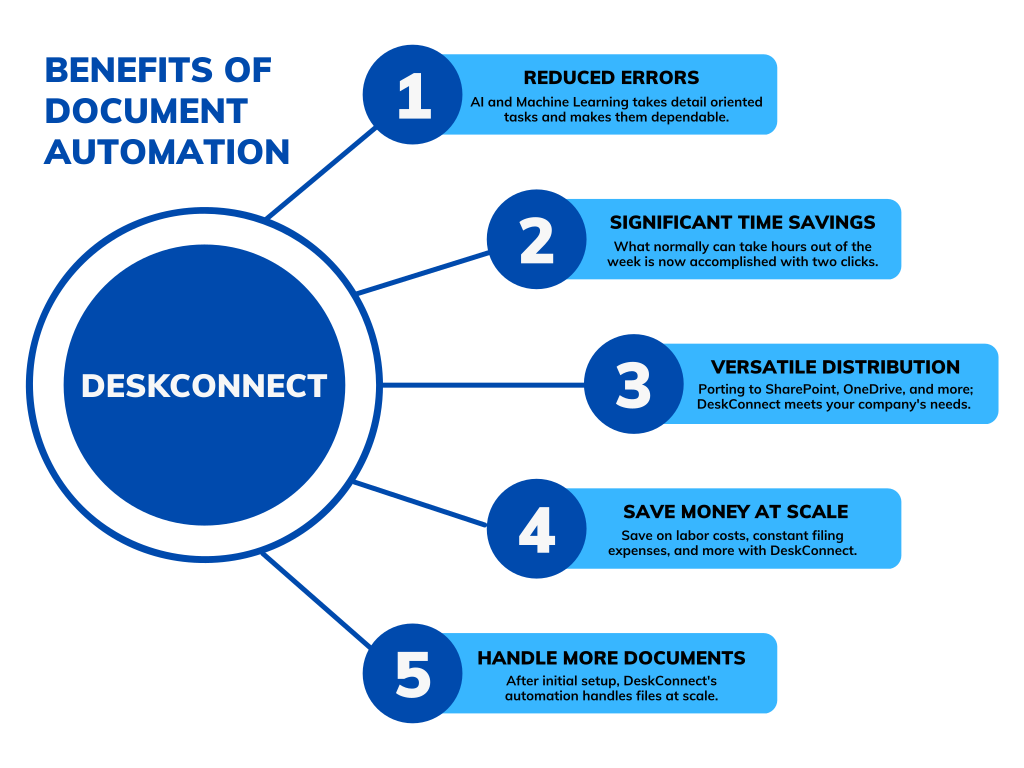
Five Key Benefits of Document Automation
Adopting document automation delivers transformative advantages that enhance business operations and competitiveness. Here are five key benefits that highlight its value in 2025:
1. Competitive Advantage
In a market where many businesses still rely on manual processes, implementing document automation provides a significant edge. By streamlining document creation, businesses can deliver faster, more professional outputs, impressing clients and outpacing competitors. For example, a law firm that automates contract generation can respond to client needs more quickly, enhancing its reputation for efficiency and reliability.
2. Resource Efficiency
Document automation frees up valuable time and resources by eliminating repetitive tasks. Instead of spending hours drafting documents, employees can focus on strategic activities like client engagement, product development, or process optimization. This shift not only boosts productivity but also allows businesses to allocate resources more effectively, driving growth without increasing headcount.
3. Consistent Branding and Content
Maintaining consistent branding across all documents is challenging, especially for large organizations. Document automation ensures that every document—whether a quote, contract, or marketing brochure—adheres to company branding guidelines and goals. Automated templates enforce uniformity in fonts, logos, and messaging, creating a cohesive and professional image that strengthens brand identity.
4. Enhanced Customer Experience
Personalized documents are key to engaging customers effectively. Document automation uses data insights to create tailored transactional documents, such as customized invoices or personalized proposals, that resonate with recipients. This enhances the customer experience, fosters loyalty, and streamlines the purchase journey. For instance, a sales representative can quickly generate a quote tailored to a client’s needs, improving engagement and closing deals faster.
5. Streamlined Digital Content Sharing
In today’s digital world, secure and instant content sharing is essential. Document automation enables professionals to create, share, and capture signatures on transactional documents quickly while adhering to regulatory requirements. Whether sharing contracts with clients or distributing reports to stakeholders, the software ensures secure transmission and seamless collaboration, reducing delays and enhancing efficiency.
Additional Advantages of Document Automation
Beyond the core benefits, document automation offers several additional advantages that make it a must-have for modern businesses:
- Scalability: Document automation scales effortlessly, handling everything from small document runs to high-volume production for large enterprises.
- Error Reduction: Automated data population and template enforcement minimize human errors, ensuring high-quality outputs.
- Cost Savings: By reducing manual labor and streamlining workflows, document automation lowers operational costs and boosts ROI.
- Improved Collaboration: Centralized document management allows teams to access and collaborate on documents in real-time, enhancing teamwork and productivity.
Why Document Automation Matters in 2025
In 2025, businesses face increasing pressure to operate efficiently while meeting customer expectations for speed and personalization. Document automation addresses these challenges by streamlining workflows, reducing errors, and enabling scalable document production. Whether you’re generating contracts, quotes, or compliance documents, automation ensures your processes are agile, accurate, and aligned with business goals.
Implementing document automation also positions businesses for future growth. As organizations expand, the ability to handle growing document volumes without sacrificing quality becomes critical. Solutions like FabSoft’s SysConnect and DeskConnect integrate seamlessly with existing systems, offering user-friendly interfaces and high customization options to meet diverse needs. By adopting document automation, businesses can stay competitive, improve customer satisfaction, and drive long-term success.
Getting Started with Document Automation
Transitioning to document automation may seem daunting, but with the right tools and strategy, it’s a straightforward process. Start by identifying repetitive document tasks that consume significant time, such as generating reports or contracts. Then, choose a solution that integrates with your existing systems and offers features like template management, data integration, and compliance support. FabSoft’s document automation solutions, backed by over 31 years of expertise, provide a reliable starting point for businesses looking to transform their workflows.
By embracing document automation, you can unlock new levels of efficiency, accuracy, and customer engagement, positioning your business for success in the digital age. Whether you’re a small business streamlining quotes or a large enterprise managing complex compliance documents, document automation is a transformative tool that delivers measurable results.
Ready to Transform Your Document Management?
See how FabSoft can streamline your document workflows. Try AI File Pro free, or talk to our team about your needs.